
Few times capture the capital’s spirit like the autumn festival season, and for any Navratri Dussehra Delhi visitor, it is a wonderful moment to arrive. Over nine nights of Navratri and the triumphant finale of Dussehra, the city fills with music, colour, fasting and feasting, dance, and towering effigies that light up the night sky. This visitor’s guide explains what happens, where to experience it, and how to plan a comfortable, well-timed trip.
What Navratri and Dussehra celebrate
Navratri, meaning nine nights, honours the goddess Durga in her many forms, and unfolds over nine days of devotion, fasting and celebration, usually in September or October. It culminates in Dussehra, also called Vijayadashami, which marks the victory of good over evil, the triumph of Lord Rama over the demon king Ravana. In Delhi, the two together create a fortnight of remarkable energy across temples, neighbourhoods and public grounds.
How Delhi celebrates
The festival takes many forms across the city, and you can dip into as much or as little as you like:
- Ramlila performances, open-air dramatisations of the Ramayana, staged over several evenings in grounds across Delhi.
- Grand Dussehra effigy burnings, where towering figures of Ravana are set alight amid crowds and fireworks.
- Temple celebrations and jagrata nights filled with devotional music.
- Garba and dandiya dance events, especially popular in the city’s many community and cultural venues.
- Seasonal food, from festive sweets to special fasting-friendly dishes.
Tips for visiting during the festival
The festive fortnight is joyous but busy, so a little planning goes a long way. Book accommodation early, as this is a popular season. Use the Metro to reach events, since roads near celebration grounds can be congested and parking scarce, and staying close to a Metro station makes evenings out far easier. Dress modestly for temple visits, carry water, and keep an eye on children in large crowds. If you are fasting or curious about festival food, ask locally for the day’s special vegetarian and fasting dishes.
A comfortable base for the festivities
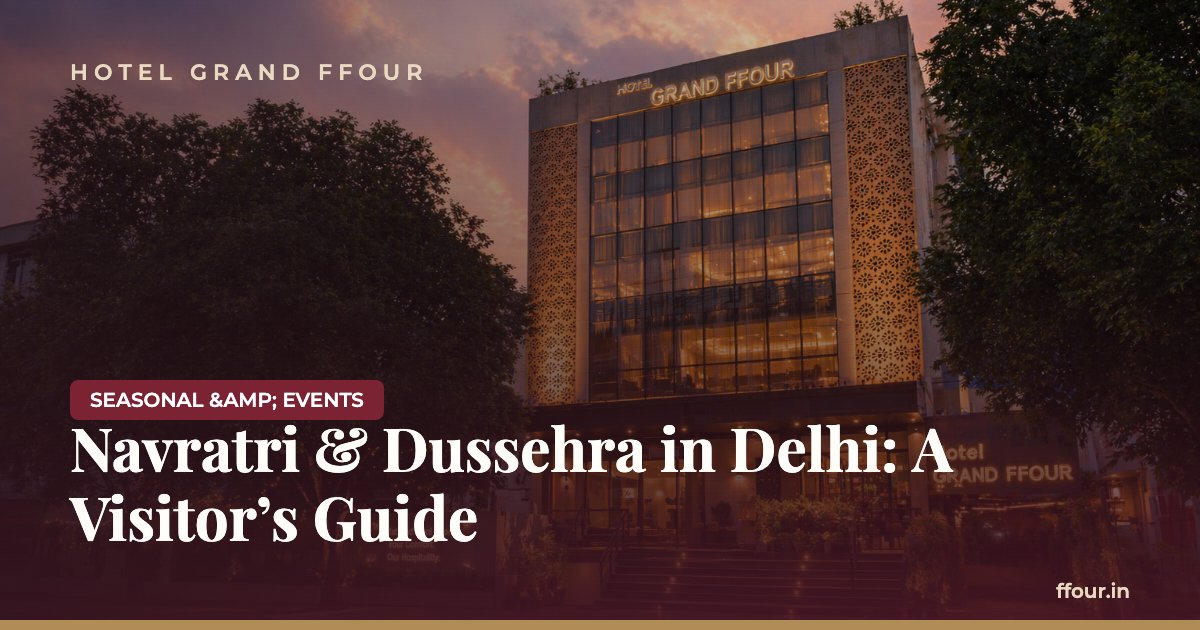
Because so much of the festival happens in the evenings, a well-connected, restful base makes all the difference. Grand FFOUR in East of Kailash sits roughly 50 metres from Kailash Colony Metro on the Violet Line, so you can head out to a Ramlila or dandiya night and return easily afterwards. With free breakfast, an on-site restaurant, a 24/7 front desk and our complimentary FFOUR O’Clock chai at 4 pm for direct bookers, it is an easy place to recharge between celebrations, one of several options in South Delhi worth comparing for your stay.
Frequently asked questions
When are Navratri and Dussehra celebrated in Delhi?
They fall in autumn, usually September or October, with the exact dates set by the Hindu lunar calendar and varying each year. Navratri runs for nine nights and is followed immediately by Dussehra on the tenth day.
Where can I see Ramlila and Ravana effigy burning?
Ramlila performances and Dussehra effigy burnings take place at grounds and public spaces across Delhi during the festival. Ask locally or check listings for the venues nearest you, and plan to travel by Metro, as these events draw large, lively crowds.
Is it a good time to visit Delhi?
Yes. The weather in October is generally pleasant, and the festive atmosphere is memorable. Just book accommodation early, as it is a popular season, and use the Metro to move around comfortably in the evenings.
Planning to experience Delhi's festival season? Book direct at ffour.in/ or WhatsApp +91 98108 19422 for a warm, well-connected stay steps from Kailash Colony Metro, with free breakfast and our complimentary FFOUR O'Clock chai to end each festive day.
Plan your stay with Hotel Grand FFOUR
- Where to stay: Hotels near South Delhi Landmarks
- More options: Rooms, or browse all our Rooms & Suites
- Related reading: Where Wedding Guests Should Stay in South Delhi